

Friday, December 25, 2015

Saturday, December 19, 2015
Changes and stuff

I've over come my hay fever
with out pharmaceutical :)
Done some small changes to this blog
was getting tired of the old look of the blog.
I might do some more changes if i have time>

Wednesday, December 2, 2015
Muscle name!!!!!

Got a new phone, with a better camera. Now it
will be much easier to post up drawings from my sketchbook
to this blog.
Here's a sketch I did last night for the Orbicularis oris muscle

Saturday, November 28, 2015


Friday, November 20, 2015
Form 6

--------------------------------------------------------------------------------------------------------------------
Learning to apply construction can be tedious and boring at times but its crucial to learn
and it especially helps with your imagination work, so you'll have to keep at it.
It is hard at the start but if you keep at it, it will pay off.
To make the construction phase more interesting I've decided
to learn about different types of folds too.
For each type of fold, I did these things in the first image (the gif):
(1) started with a rough sketch for the pose for the character
(1) started with a rough sketch for the pose for the character
(2) then I lowered the opacity of the rough sketch layer and made a new layer
to draw the clean basic construction.
(3) then made another layer and drew clothes, folds and hair etc.
(4) made another new layer for the final black clean lines


Never give up and keep at it!
Like I said before construction can be tedious at times
but once you get used to it, you'll start to have a lot of fun figuring
out how things connect together.
Construction is the type of thing that you can't just read and expect to be able to do it.
You have to put a lot of hours into understanding this and drilling it into your brain.

I bought some new sketchbooks and double-headed coloured pencils
for the underlying construction and some great black ink pens for the
clean over drawing. 
After compiling years of drawing with a logical construction
process then it will come second nature.
Then if you want to make the move to freehand drawing
it's very hard at first but just keep at it.
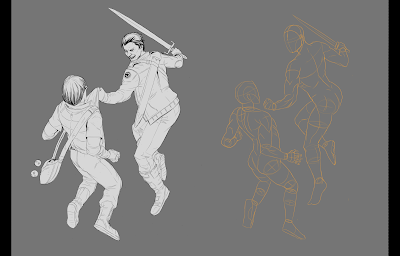
The next exercise is just like the last exercise in form number 5 >
first you draw the construction but instead of drawing over it
you draw the image that you wanted beside it.
Once you get good at that, you are free.

Tuesday, November 17, 2015
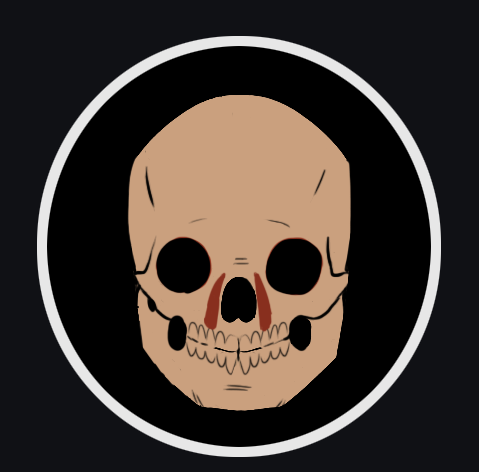
two muscle names!!
Levator labii superioris


----------------------------------------------------------------------------------------------------------------------
Levator labii superioris alaeque nasi

Sunday, October 18, 2015


Saturday, October 10, 2015
Keep drawing or I'll run you over

Two artist I know Kod & James just started a blog/FB art page
so give them a FB like or a blog follow so say Hi :)
Friday, October 9, 2015


Tuesday, October 6, 2015
Form 05

These planes will not be dealing with light sources - I will get into that later.
This post will help with getting to know irregular things like convex and concave
surfaces, and relative proportions.
------------------------------------------------------------------------------------------------
Here's some helpful basic exercises to get your brain used to
drawing on the illusion of a plane.
(A) Draw some relatively basic block objects, then use a red pen to
draw straight lines across their planes. Try to get the feel of the planes.
(B) Draw some basic objects and boxes. Then draw/graffiti on them.
Try to imagine that you're drawing on a surface in that plane's perspective.
(C) Again draw some basic objects then try to draw other objects
coating the surfaces like rocks, leaves, hair and any other
objects you can think of.
(A)

(B) (C)
(C)
----------------------------------------------------------------------------------------------------- (C)
(C)
I found it helpful to draw a range of planes on three heads,
each had a different number of planes, low to high:
(1) simple (2) moderate (3) complex

Then I did a study of the skull from my skeleton, referencing the range
of planes from the heads in the picture above.
I turned the object I was drawing (skull) into simple planes,
looking at the heads to remind me to draw the right amount of them.
This can help with learning how to break down round shapes into flat planes.

This exercise will help your planes and proportions of your
imagination work.
(A) construct a monster/person then draw the planes over the construction (red).
Then draw over it with black pen using the planes to guide your drawing.
Imagine you're drawing on a 3D low poly model
Then when you get good at that, try (B)
(B) this is like like (a) but you don't draw over it, instead you
draw your image beside it and use the drawing with planes as reference.
If you found that easy, try putting the constructed plane image away
and try it from memory. Good luck!

Subscribe to:
Posts (Atom)